Blog

What is Radical Candor? The basic principles in 6 minutes.

What is Radical Candor? People often get confused about what Radical Candor really means.

It's not brutal honesty. Radical Candor really just means saying what you think while also giving a damn about the person you’re saying it to.

Watch Radical Candor author and co-founder Kim Scott give the quick-and-dirty explanation below.

What Is Radical Candor? Kim Scott Explains It in 6 Minutes


Your entire working life you’ve been told to be professional. Too often, that’s code for leaving your humanity at home. To build strong relationships, you have to Care Personally.

This can be as simple as showing enough vulnerability to admit when you’re having a bad day and creating a safe place for others to do the same.

Since you learned to talk you’ve likely been told some version of, “If you don’t have anything nice to say, don’t say anything at all.” Then you become the boss and the very thing you’ve been taught not to do since you were 18 months old is suddenly your job.

In order to succeed, you have to Challenge Directly. Challenging people is often the best way to show you care. It does not mean that whatever you think is the truth; it means you share your (humble) opinions directly.

Radical Candor happens when you put these two things together to give feedback that's kind, clear, specific and sincere.

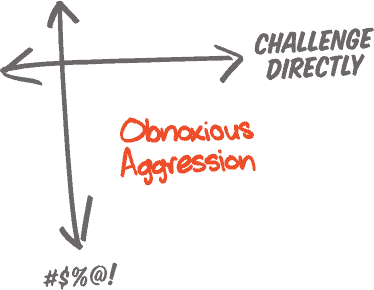
What Is Obnoxious Aggression?
 

What is Radical Candor?


Obnoxious Aggression, also called brutal honesty or front stabbing, is what happens when you challenge someone directly, but don’t show you care about them personally.

It’s praise that doesn’t feel sincere or criticism and feedback that isn’t delivered kindly.

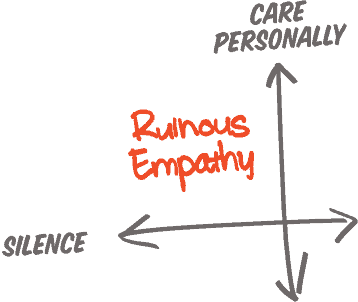
What Is Ruinous Empathy?
 

What is Radical Candor?


Ruinous Empathy is what happens when you want to spare someone’s short-term feelings, so you don’t tell them something they need to know.

It’s praise that isn’t specific enough to help the person understand what was good or criticism that is sugar-coated and unclear. Or simply silence.

Ruinous Empathy may feel nice or safe, but is ultimately unhelpful and even damaging.

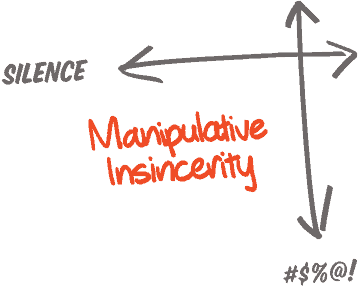
What Is Manipulative Insincerity?
 

What is Radical Candor?


Manipulative Insincerity is praise that is insincere, flattery to a person’s face and harsh criticism behind their back.

It’s the kind of backstabbing, political, passive-aggressive behavior that might be fun to tell stories about but makes for a toxic workplace, ruining relationships and ruining work.

People give praise and criticism that is manipulatively insincere when they are too focused on being liked or they think they can gain some sort of political advantage by being fake, or when they are too tired to care or argue anymore.

Need help with Radical Candor? Let's talk! >>

————————————————————————————————————————————————————————————–


Dive Deeper

For you

Kick ass at work without losing your humanity. Check out our Online Courses and Tools for you to work through on your own time.

Check out Public Workshops, AI Coach, and Online Courses →

For your team

Workshops teach the Radical Candor framework and includes hands-on practice. Real scenarios, role play, up to 150 people. Half or full day. Virtual or in person.

Check out team workshops →

FAQs

What is Radical Candor in simple terms?

Radical Candor means saying what you honestly think while genuinely caring about the person you're saying it to. It's not brutal honesty — the difference is that you pair directness with personal concern. According to Kim Scott, it's feedback that is kind, clear, specific, and sincere. The two core behaviors are Care Personally (bringing your humanity to work) and Challenge Directly (sharing your humble opinions openly rather than staying silent).

What are the four quadrants of Radical Candor?

The Radical Candor framework has four quadrants based on how much you Care Personally and Challenge Directly:

  • Radical Candor — high care + high challenge; the goal.
  • Obnoxious Aggression — high challenge, low care; brutal honesty or "front stabbing."
  • Ruinous Empathy — high care, low challenge; withholding feedback to spare feelings in the short term.
  • Manipulative Insincerity — low care + low challenge; insincere flattery, backstabbing, and political behavior.

Most managers default to Ruinous Empathy, which feels safe but is ultimately unhelpful.

What is the difference between Radical Candor and Obnoxious Aggression?

The key difference is whether you care about the person you're challenging. Obnoxious Aggression — sometimes called brutal honesty or front stabbing — happens when you challenge someone directly but don't show you care about them personally. The criticism may be accurate, but it isn't delivered kindly, and praise doesn't feel sincere. Radical Candor adds genuine personal concern to that same directness, making feedback land constructively rather than hurtfully.

Why is Ruinous Empathy harmful?

Ruinous Empathy happens when you prioritize someone's short-term comfort over their long-term growth. You might soften criticism until it's meaningless, give vague praise that doesn't help someone replicate good work, or say nothing at all. It feels kind in the moment, but it denies people the information they need to improve. Kim Scott argues this is the most common management failure — it damages relationships and results even though (or because) it comes from a place of wanting to be nice.

What is Manipulative Insincerity and what causes it?

Manipulative Insincerity is the quadrant where you neither care personally nor challenge directly. It shows up as insincere flattery to someone's face paired with harsh criticism behind their back — classic backstabbing, political, or passive-aggressive behavior. According to Kim Scott, people slip into Manipulative Insincerity when they're too focused on being liked, think they can gain a political advantage by being fake, or are simply too tired to care or engage anymore. It's the most toxic quadrant and destroys workplace trust.

How do you practice Radical Candor as a manager?

Start with the two core behaviors: Care Personally by showing vulnerability — admit when you're having a bad day and create psychological safety for your team to do the same. Challenge Directly by sharing your honest, humble opinions rather than staying silent or sugarcoating. When you combine both, your feedback becomes kind, clear, specific, and sincere. The goal isn't to be the boss who is always right — it's to be the boss who creates an environment where honest, caring conversations are the norm.

Share your perspective

This site is protected by reCAPTCHA and the Google Privacy Policy and Terms of Service apply.

More from Radical Candor

Blog

How Do You Ask for Feedback? The Three Tests of a Good Go-To Question

The idea Get it. Don’t just be open to it.

Read more
Blog

How Do You Get Feedback? The Four Steps to Solicit Radical Candor®

A Story People often focus on feedback they get from their bosses. But the best feedback comes from the people who work for you. It can be difficult to get it—unless you create a …

Read more
Podcast

Fixing the Employee Experience (with Tiffani Bova) 8 | 26

While the podcast team is on a Radical Sabbatical, Kim Scott is spending the season talking to authors of the books that have shaped her thinking. This week: Tiffani Bova, whose …

Read more